Crown Court Billing for Appeals to the Court of Appeal (Criminal Division)

Following an adverse verdict or sentence in the Crown Court, instructed solicitors and counsel have an ethical and professional duty to consider grounds of appeal to the Court of Appeal (Criminal Division). In Crown Court billing, understanding how post-conviction advice and appeal drafting are funded is crucial. While initial advice on appeal is covered by […]
Crown Court Billing for Travel, Mileage and Accommodation Disbursements

Travel expenses, motor mileage, and overnight hotel stays incurred by criminal defence solicitors, litigators, and advocates represent substantial out-of-pocket expenditure. In Crown Court billing, recovering these disbursements requires strict compliance with Legal Aid Agency travel rules. Submitting travel claims without proper tickets, mileage logs, or prior travel justification is one of the quickest ways to […]
Crown Court Billing for Section 28 Pre-Recorded Cross-Examination Hearings
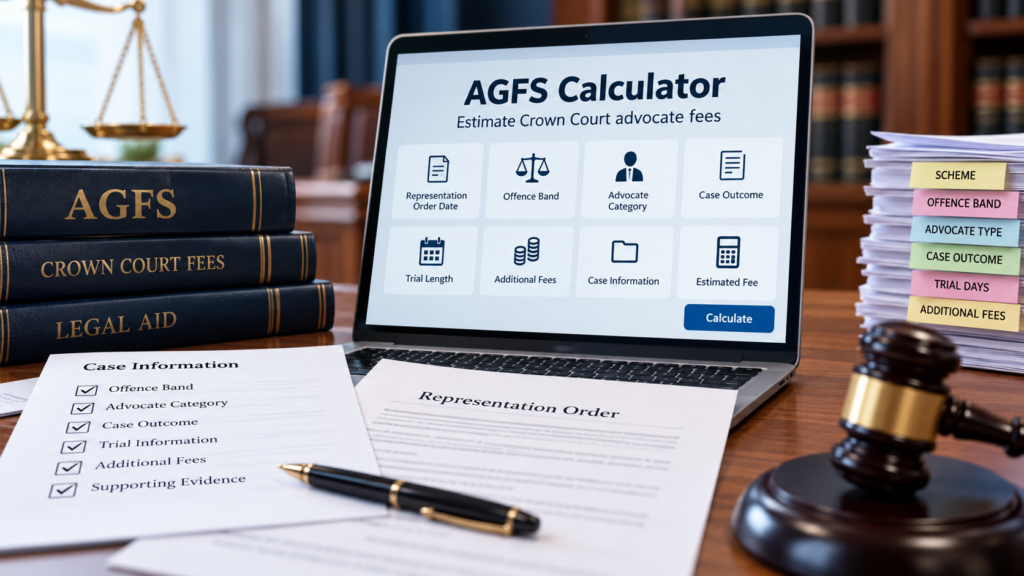
Section 28 of the Youth Justice and Criminal Evidence Act 1999 enables vulnerable and intimidated witnesses to have their cross-examination and re-examination recorded on video prior to the main trial. For criminal defence practitioners, Crown Court billing for Section 28 hearings involves specific remuneration rules updated under recent fee scheme revisions. Because Section 28 proceedings […]
Crown Court Billing for Fitness to Plead Hearings: Procedure & Rates

Cases involving defendants with profound mental illness, intellectual disability, or cognitive impairment frequently require Fitness to Plead determinations under the Criminal Procedure (Insanity) Act 1964. In Crown Court billing, these proceedings involve complex two-stage trials that demand specialised billing treatment. Practitioners must ensure both the preliminary fitness argument and any subsequent “trial of the facts” […]
Crown Court Billing for Bail Applications & Breaches: Fee Guidance
Interlocutory applications regarding bail—including initial Crown Court bail hearings, Judge in Chambers applications, and breach of bail proceedings—form a critical part of criminal practice. In Crown Court billing, understanding how these hearings are remunerated prevents unrecovered advocate and solicitor hours. Depending on whether the hearing occurs before or after the main case concludes, distinct statutory […]
Crown Court Billing for Deferred Sentences: Interims, Caps and Final Billing

When a Crown Court judge defers sentence under Section 1 of the Powers of Criminal Courts (Sentencing) Act 2000, final disposal may be delayed for up to six months. For law firms and chambers, managing cash flow during this extended period requires understanding Crown Court billing for deferred sentences. Fortunately, the regulations allow practitioners to […]
Crown Court Billing for Confiscation & POCA Proceedings: Compliance Guide
Proceedings under the Proceeds of Crime Act 2002 (POCA) represent a distinct, highly technical phase of criminal litigation. In Crown Court billing, confiscation hearings and financial benefit determinations are treated separately from the substantive trial indictment, governed by specific remuneration rules. Failing to separate confiscation work from the primary graduated fee claim can result in […]
Crown Court Billing for Newton Hearings: Determining Evidentiary Hearing Fees

A Newton Hearing occurs when a defendant enters a guilty plea, but a material conflict of fact remains between the prosecution and defence that could significantly alter the sentence. For criminal law practitioners, Crown Court billing for Newton Hearings involves specific fee rules that bridge the gap between guilty pleas and effective trials. Understanding whether […]
Crown Court Billing for Retrials and Re-Hearings: Statutory Fee Entitlements
When a Crown Court jury is discharged without reaching a verdict, or when the Court of Appeal quashes a conviction and orders a fresh trial, the legal team must prepare for a retrial. In Crown Court billing, retrials operate under dedicated statutory remuneration formulas rather than standard single-trial fees. Both litigators and advocates are entitled […]
Crown Court Billing for Multi-Handed Trials: Uplifts and Co-Defendant Rules
Multi-handed trials involving multiple co-defendants represent some of the most demanding cases in the Crown Court. For defence litigators and advocates, Crown Court billing for multi-handed proceedings provides statutory percentage uplifts to compensate for the additional evidentiary and strategic burden. Understanding how to properly record and substantiate co-defendant uplifts on the CCCD Crown Court billing […]