Crown Court work has two big parts, billing and hearings. One moves the case through the court. The other records time, travel, prep, and attendance, then turns that work into a payable fee.
If either side slips, the file can wobble. A wrong hearing date can hold up an invoice. Extra waiting at court can change the cost of the day. That matters for legally aided cases and private matters alike.
It also affects case outcomes, because poor records often mean rushed follow-up and missed steps. When the paperwork matches the courtroom record, fewer questions land on your desk later. The sections below show how billing usually works, what happens at hearings, and how clear records help you avoid delays or payment mistakes.
How Crown Court billing usually works
Most Crown Court bills start with the file. Solicitors, fee earners, and advocates record what they did, when they did it, and why it was needed. Then those notes are turned into a claim, invoice, or fee note under the right funding rules. Accurate billing also helps firms track cash flow and explain costs clearly.

What work is usually included in a Crown Court bill
A bill often covers case prep, client meetings, and reading papers. It may also include drafting advice, court attendance, travel, waiting time, and follow-up after the hearing. Some files add calls with counsel, disclosure work, or letters sent after court. Not every task is billed the same way. Some items are fixed. Others depend on time spent, hearing type, or the fee scheme in place.
Why fees can change from one case to the next
Costs rise when a case grows. A brief mention hearing is not billed like a multi-day trial. Urgent work, heavy papers, more than one advocate, long travel, and late changes can all affect the figure. Funding matters too. Legal aid often follows set rules or set-fee schemes, while private work may follow agreed hourly rates or stage fees.
How to avoid billing errors and disputes
Small mistakes cause big delays. Match time records to the hearing date, courtroom, and result. Keep attendance notes short but clear, and describe each task in plain words. Before anything goes out, check the invoice against the diary and file notes. If the record is tidy, payment questions are easier to answer, and fee disputes are less likely.
What happens during Crown Court hearings
A hearing day rarely follows the neat plan in the diary. People arrive, check in, wait for the case to be called on, and deal with any last-minute papers or talks. What happens in court shapes the next step in the case. It also shapes what must be billed after the hearing.

The main people in the courtroom and what they do
The judge controls the hearing and makes orders. Barristers present the case in court. Solicitors support the case, take instructions, and handle papers before and after the hearing. Defendants attend and respond to the case against them. Witnesses may give evidence. Ushers and court staff manage the list, call cases, and keep the room moving.
Common hearing stages you may see in Crown Court
Many cases begin with a plea hearing or an early case management hearing. There may then be a pre-trial review, a mention to fix or move the trial dates, and, later, the trial itself. Some cases end after a plea and sentence. Sentence hearings can look short on paper, but still need prep and advice. Other matters are adjourned for reports, disclosure issues, or legal argument, so not every case reaches every stage.
How hearing length and waiting time affect the day
Court lists are busy, so hearings often start late or overrun. A ten-minute hearing can still take half a day on site once travel, waiting, and post-hearing work are added.
Court time and speaking time are rarely the same.
That gap matters for billing. It also affects client care, because someone must record what happened, explain the next date, and reset the work plan for the file.
How to connect billing records with hearing dates
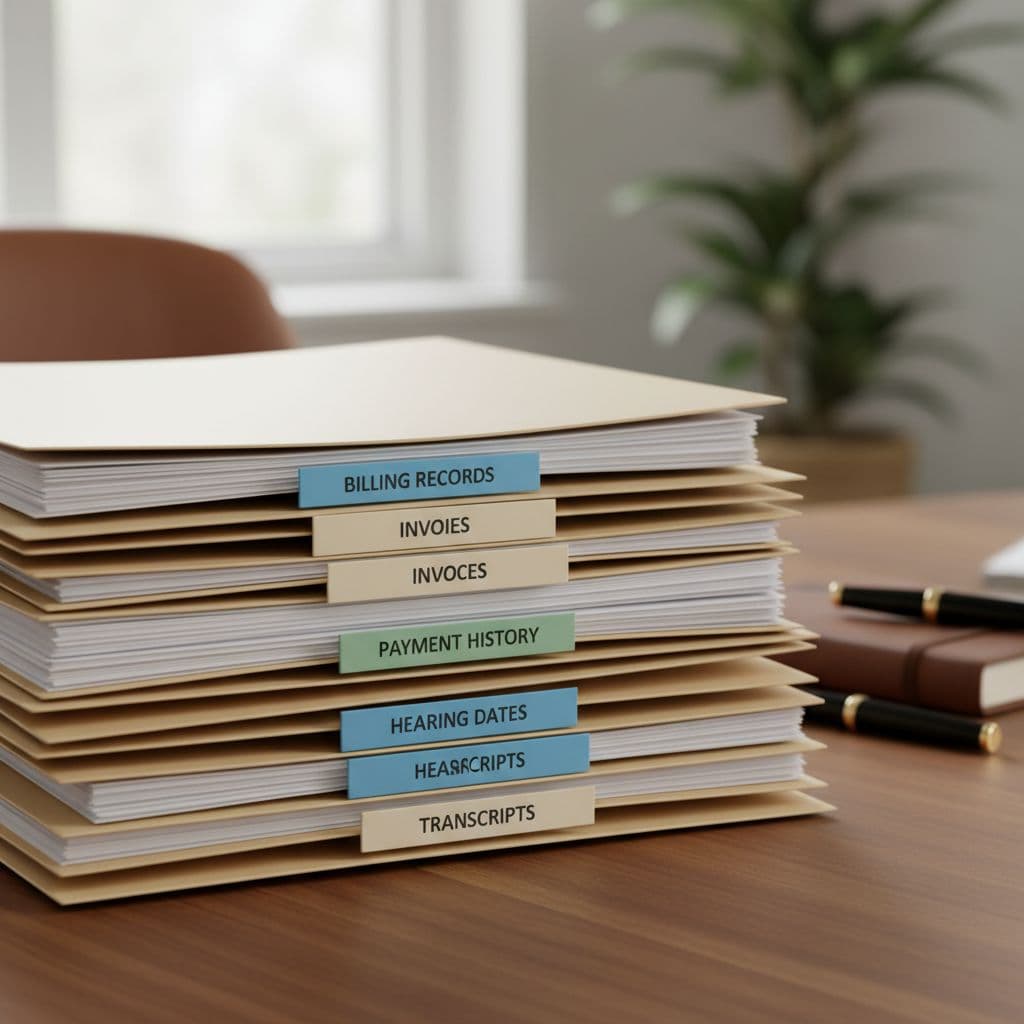
Strong records save time later. When hearing dates, attendance notes, and billing entries all match, it is easier to support a claim and answer questions fast. That also helps if the file changes hands or a bill is checked months later.
What details should be recorded after each hearing
A short note after court should cover the basics:
- hearing date and courtroom
- case name or reference
- start and end time
- who attended
- what happened in court
- follow-up work and the next date
Those few lines can prevent a long chase later.
Simple ways to track work for accurate invoices
Use one system for diary entries, time sheets, hearing logs, and file notes. Paper or digital can both work, but mixing several systems often creates gaps. Add the note on the same day if you can. Keep travel time, waiting time, and hearing time separate, because they may be billed in different ways. If counsel and solicitor keep separate notes, compare them while the day is still fresh.
Red flags that often cause billing delays
Trouble usually starts with missing attendance notes, vague task entries, wrong hearing dates, gaps in time records, or approvals that were never signed off. Even a small mismatch can slow payment, because someone must stop and ask for proof. Regular checks, done early, stop those errors from stacking up and holding the bill back.
Conclusion
Crown Court billing and court hearings work best when the file tells the same story as the courtroom. Clear dates, accurate attendance notes, and early cost checks cut down on rejected claims and last-minute confusion.
That is the practical takeaway. Good organization saves time, reduces disputes, and keeps the case moving after each hearing. It also helps everyone on the file, including the client waiting for the next step. When the record is clean, billing is easier and court work is easier to manage.