Crown Court Billing for Contempt of Court Hearings: Representation and Fees

Contempt of Court proceedings under the Contempt of Court Act 1981 or the inherent jurisdiction of the Crown Court arise in situations of juror misconduct, social media commentary violating reporting restrictions, or witness refusal to testify under oath. In Crown Court billing, representing a respondent in contempt proceedings requires specific funding structures. Because contempt carries […]
Crown Court Billing for Bail Act Offences and Estreatment of Recognizance

When a defendant fails to attend court without reasonable cause, they commit an offence under Section 6 of the Bail Act 1976, often accompanied by proceedings to estreat surety recognizances. In Crown Court billing, understanding how failure to surrender charges are remunerated ensures that defence teams recover all earned allowances. Depending on whether the Bail […]
Crown Court Billing for Sexual Offences: Offence Class J & Special Measures
Prosecutions involving serious sexual offences—including rape, sexual assault, and historic sexual abuse—are categorized under Offence Class J (LGFS) and Band 3 (AGFS). In Crown Court billing, these sensitive cases feature extensive pre-trial applications, special measures directions, and voluminous third-party disclosure. Practitioners must ensure all pre-recorded cross-examinations, ground rules hearings, and medical disclosure reviews are fully […]
Crown Court Billing for High Court Bail Applications: Remuneration Guidance

When a Crown Court judge refuses bail in serious criminal proceedings, the defendant has the statutory right to apply for bail before a High Court Judge in Chambers under the Bail Act 1976. In Crown Court billing, securing remuneration for High Court bail applications requires understanding the intersection between the Crown Court Representation Order and […]
Crown Court Billing for Intermediary Attendance: Ground Rules and Allowances
Registered Intermediaries facilitate communication between vulnerable defendants, legal teams, and the court during complex criminal proceedings. In Crown Court billing, understanding how intermediary assessments and court attendance are funded ensures compliance with HMCTS and LAA guidelines. Because intermediary funding rules have evolved significantly, practitioners must distinguish between court-funded and legal aid-funded appointments. 1. Judicial Appointment […]
Crown Court Billing for Breach of Suspended Sentences and Community Orders
Breach proceedings in the Crown Court—whether relating to a Suspended Sentence Order (SSO), Community Order, or conditional discharge—occur frequently when a probation officer or youth offending team lodges breach notices. In Crown Court billing, understanding how breach representation is funded ensures complete cost recovery. Knowing whether a breach can be linked to the original substantive […]
Crown Court Billing for Sentence Hearings Following Committal for Sentence
When a defendant pleads guilty in the Magistrates’ Court but the bench considers their sentencing powers insufficient, the matter is committed for sentence to the Crown Court under the Sentencing Code. In Crown Court billing, committal for sentence represents a distinct fee category governed by fixed statutory allowances rather than full trial graduated fees. Solicitors, […]
Crown Court Billing for Section 28 Pre-Recorded Cross-Examination Hearings
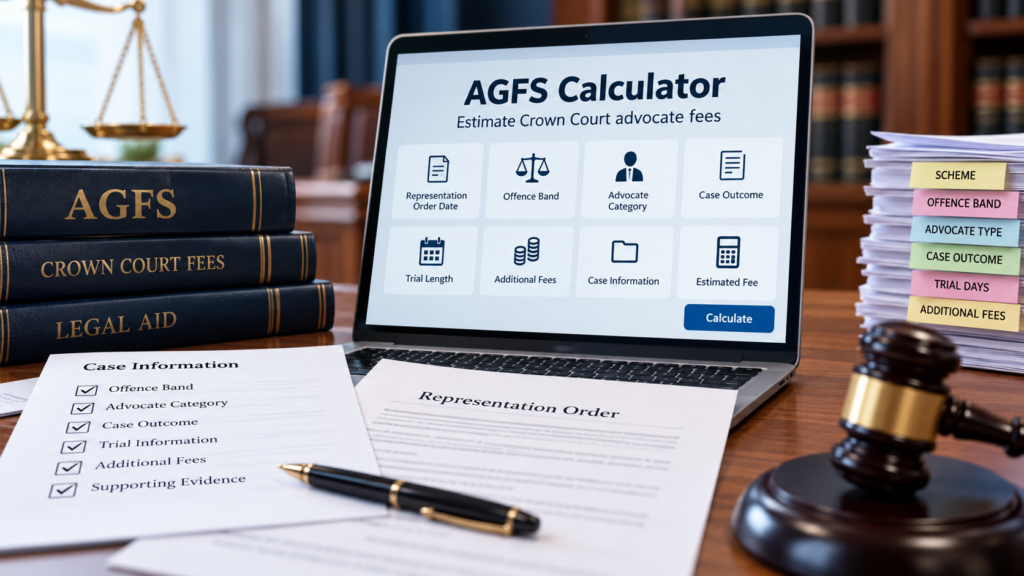
Section 28 of the Youth Justice and Criminal Evidence Act 1999 enables vulnerable and intimidated witnesses to have their cross-examination and re-examination recorded on video prior to the main trial. For criminal defence practitioners, Crown Court billing for Section 28 hearings involves specific remuneration rules updated under recent fee scheme revisions. Because Section 28 proceedings […]
Crown Court Billing for Bail Applications & Breaches: Fee Guidance
Interlocutory applications regarding bail—including initial Crown Court bail hearings, Judge in Chambers applications, and breach of bail proceedings—form a critical part of criminal practice. In Crown Court billing, understanding how these hearings are remunerated prevents unrecovered advocate and solicitor hours. Depending on whether the hearing occurs before or after the main case concludes, distinct statutory […]
Crown Court Billing for Newton Hearings: Determining Evidentiary Hearing Fees
A Newton Hearing occurs when a defendant enters a guilty plea, but a material conflict of fact remains between the prosecution and defence that could significantly alter the sentence. For criminal law practitioners, Crown Court billing for Newton Hearings involves specific fee rules that bridge the gap between guilty pleas and effective trials. Understanding whether […]