Crown Court Billing for Acquitted Defendants: Defendant’s Costs Orders (DCO)

When a defendant is acquitted by a jury in the Crown Court or the prosecution offers no evidence, the trial judge may make a Defendant’s Costs Order (DCO) under Section 16 of the Prosecution of Offences Act 1985. In Crown Court billing, recovering costs under a DCO represents a specialized procedure governed by statutory remuneration […]
Crown Court Billing for Youth Court Transfers and Committals: Fee Rules
When a youth defendant (under 18 years of age) is charged with a grave crime under Section 249 of the Sentencing Act 2020 or sent for joint trial with an adult co-accused, proceedings transfer from the Youth Court to the Crown Court. In Crown Court billing, youth transfers involve distinct procedural and evidentiary rules. Defence […]
Crown Court Billing for Video Link Conferences & Prison Attendance: Time & Costs
Consultations with detained criminal clients—whether conducted via Prison Video Link (Common Video Platform / Cloud Video Platform) or in person at HMP establishments—are essential for case preparation. In Crown Court billing, evidencing and claiming these conferences requires strict compliance with LAA attendance rules. With the widespread adoption of remote video hearings and prison CVP links, […]
Crown Court Billing for VHCC (Very High Cost Cases): Individual Case Contracts

When a Crown Court trial is estimated to exceed 40 trial days, or involves massive digital disclosure (over 30,000 pages of evidence), it is classified as a Very High Cost Case (VHCC). In Crown Court billing, VHCC cases bypass the standard LGFS graduated fee scheme entirely, entering an individual contract regime managed by the LAA […]
Crown Court Billing for Unused Material & Third-Party Disclosure Reviews

In complex Crown Court trials—such as historic sexual offences, financial fraud, and conspiracy allegations—reviewing unused prosecution material and third-party disclosure (social services records, school logs, medical notes) constitutes a monumental proportion of defence preparation. In Crown Court billing, securing remuneration for this work requires meticulous adherence to LAA guidelines. Because unused material does not automatically […]
Crown Court Billing for Transferred Representation: Apportioning Fees

When a defendant changes solicitors during Crown Court proceedings with leave of the court, a transfer of legal aid takes place. For both the originating firm and the newly instructed successor firm, Crown Court billing for transferred representation requires strict coordination to ensure fair statutory fee apportionment. Because the Legal Aid Agency cannot pay two […]
Crown Court Billing for Sentence Hearings Following Committal for Sentence

When a defendant pleads guilty in the Magistrates’ Court but the bench considers their sentencing powers insufficient, the matter is committed for sentence to the Crown Court under the Sentencing Code. In Crown Court billing, committal for sentence represents a distinct fee category governed by fixed statutory allowances rather than full trial graduated fees. Solicitors, […]
Crown Court Billing for Appeals to the Court of Appeal (Criminal Division)
Following an adverse verdict or sentence in the Crown Court, instructed solicitors and counsel have an ethical and professional duty to consider grounds of appeal to the Court of Appeal (Criminal Division). In Crown Court billing, understanding how post-conviction advice and appeal drafting are funded is crucial. While initial advice on appeal is covered by […]
Crown Court Billing for Travel, Mileage and Accommodation Disbursements
Travel expenses, motor mileage, and overnight hotel stays incurred by criminal defence solicitors, litigators, and advocates represent substantial out-of-pocket expenditure. In Crown Court billing, recovering these disbursements requires strict compliance with Legal Aid Agency travel rules. Submitting travel claims without proper tickets, mileage logs, or prior travel justification is one of the quickest ways to […]
Crown Court Billing for Section 28 Pre-Recorded Cross-Examination Hearings
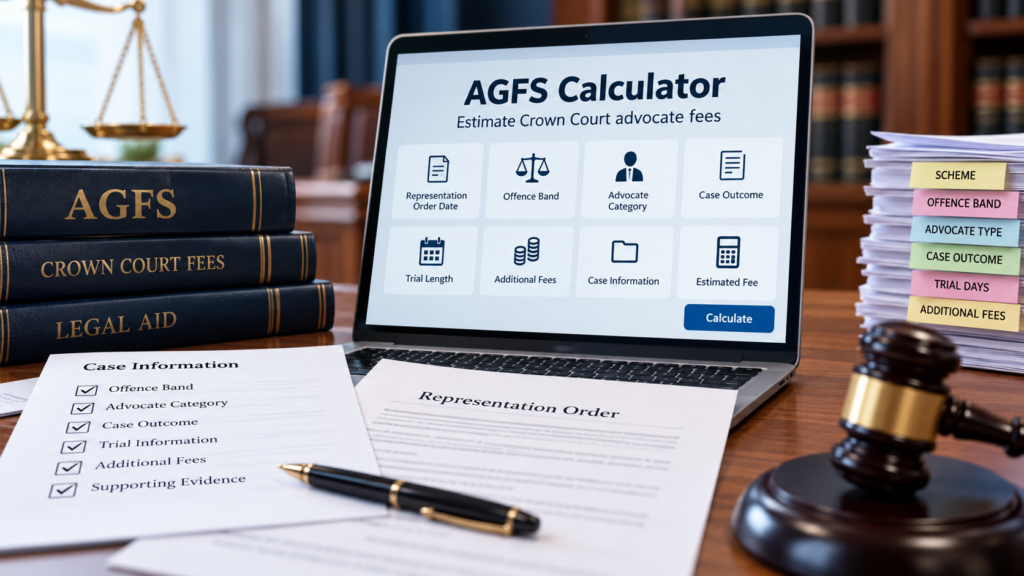
Section 28 of the Youth Justice and Criminal Evidence Act 1999 enables vulnerable and intimidated witnesses to have their cross-examination and re-examination recorded on video prior to the main trial. For criminal defence practitioners, Crown Court billing for Section 28 hearings involves specific remuneration rules updated under recent fee scheme revisions. Because Section 28 proceedings […]