Crown Court Billing Quality Audits: Peer Review, SQM and Lexcel Compliance

Criminal defence law firms holding Legal Aid Agency Standard Crime Contracts are subject to periodic, rigorous file audits. In Crown Court billing, maintaining pristine file hygiene is not only essential for immediate payment release, but is vital for passing LAA Contract Compliance Audits, Independent Peer Reviews, and SQM/Lexcel accreditations. A pattern of billing errors or […]
Crown Court Billing for Terrorism Offences: Offence Class D Regulations
Offences under the Terrorism Act 2000, Terrorism Act 2006, and National Security Act 2023 are classified under Offence Class D (LGFS) and Band 2 (AGFS). In Crown Court billing, terrorism prosecutions involve unprecedented evidentiary volumes, closed material procedures (CMP), and complex Public Interest Immunity (PII) applications. Managing terrorism billing requires navigating specialised security clearances and […]
Crown Court Billing for Interpreter and Translation Disbursements: LAA Protocols

In England and Wales, non-English speaking defendants and witnesses require registered interpreters and certified translators to ensure a fair trial. In Crown Court billing, managing interpreter costs requires a clear division between courtroom services and out-of-court defence consultations. Failing to follow LAA rate caps and voucher guidelines can lead to immediate disallowances of translation invoices. […]
Crown Court Billing for Intermediary Attendance: Ground Rules and Allowances

Registered Intermediaries facilitate communication between vulnerable defendants, legal teams, and the court during complex criminal proceedings. In Crown Court billing, understanding how intermediary assessments and court attendance are funded ensures compliance with HMCTS and LAA guidelines. Because intermediary funding rules have evolved significantly, practitioners must distinguish between court-funded and legal aid-funded appointments. 1. Judicial Appointment […]
Crown Court Billing for Expert Witness Fees: Prior Authority and Invoice Audits

Expert witnesses—including forensic toxicologists, DNA analysts, cell site experts, and consultant psychiatrists—play an indispensable role in Crown Court criminal defence. In Crown Court billing, securing full reimbursement for expert invoices requires strict adherence to Legal Aid Agency (LAA) disbursement regulations. Without meticulous documentation and timely prior authority, law firms risk carrying substantial out-of-pocket expert costs […]
Crown Court Billing for King’s Counsel (KC) and Two Counsel Orders: Requirements
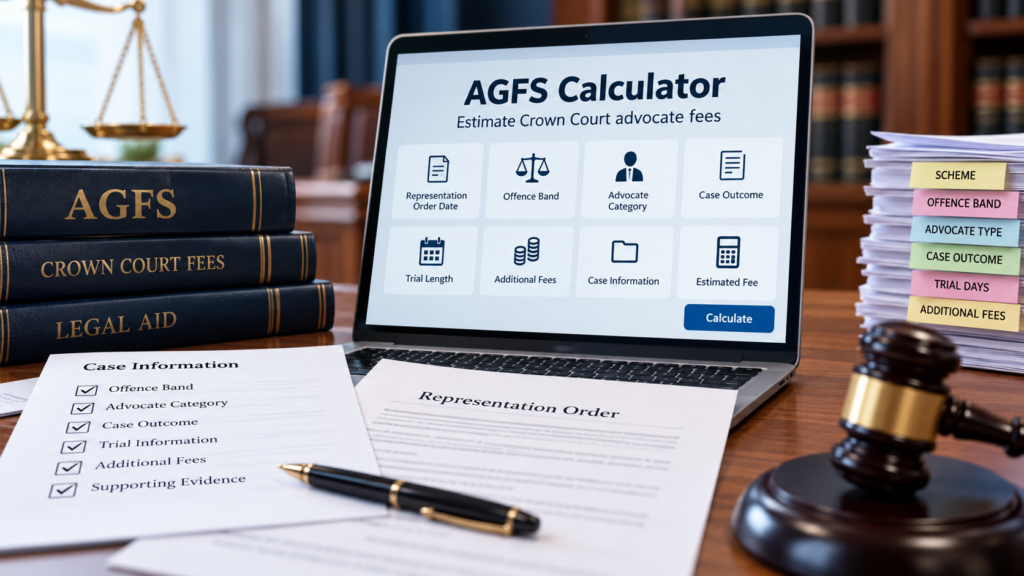
In the most serious criminal prosecutions—including murder, complex multi-million pound fraud, and national security matters—representation by King’s Counsel (KC) or two instructed advocates is essential. In Crown Court billing, securing remuneration for silk and junior advocacy requires strict adherence to judicial authorization rules. Without an explicit judicial order authorising King’s Counsel or two counsel, claims […]
Crown Court Billing for VHCC (Very High Cost Cases): Individual Case Contracts
When a Crown Court trial is estimated to exceed 40 trial days, or involves massive digital disclosure (over 30,000 pages of evidence), it is classified as a Very High Cost Case (VHCC). In Crown Court billing, VHCC cases bypass the standard LGFS graduated fee scheme entirely, entering an individual contract regime managed by the LAA […]
Crown Court Billing for Breach of Suspended Sentences and Community Orders
Breach proceedings in the Crown Court—whether relating to a Suspended Sentence Order (SSO), Community Order, or conditional discharge—occur frequently when a probation officer or youth offending team lodges breach notices. In Crown Court billing, understanding how breach representation is funded ensures complete cost recovery. Knowing whether a breach can be linked to the original substantive […]
Crown Court Billing for Travel, Mileage and Accommodation Disbursements
Travel expenses, motor mileage, and overnight hotel stays incurred by criminal defence solicitors, litigators, and advocates represent substantial out-of-pocket expenditure. In Crown Court billing, recovering these disbursements requires strict compliance with Legal Aid Agency travel rules. Submitting travel claims without proper tickets, mileage logs, or prior travel justification is one of the quickest ways to […]
Crown Court Billing for Confiscation & POCA Proceedings: Compliance Guide
Proceedings under the Proceeds of Crime Act 2002 (POCA) represent a distinct, highly technical phase of criminal litigation. In Crown Court billing, confiscation hearings and financial benefit determinations are treated separately from the substantive trial indictment, governed by specific remuneration rules. Failing to separate confiscation work from the primary graduated fee claim can result in […]