Why digital Crown Court billing is growing in 2026 is a question more law firms, chambers, and legal practice managers are asking as the pressure to work faster and more accurately continues to build. Court billing is changing rapidly. Legal teams that once managed claims through paper files, spreadsheets, and manual submission are now looking at digital systems as a practical necessity rather than an optional upgrade.
This article covers the main reasons adoption is accelerating, what forces are making digital billing harder to ignore, and the real benefits that are persuading firms to make the switch sooner rather than later.
Why Digital Crown Court Billing Is Growing in 2026
Why digital Crown Court billing is growing in 2026 comes down to three converging pressures: higher case volumes that stretch admin capacity, a renewed focus on reducing billing errors that cost firms money, and the demand for faster payment cycles that improve cash flow. Legal teams handling Crown Court defence work have always faced complex billing rules, but in 2026 those rules are being applied more strictly while the volume of claims continues to rise.
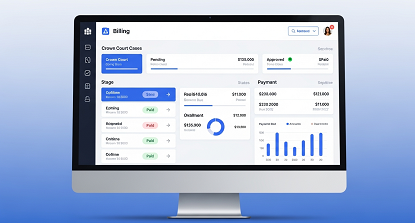
Digital billing systems address all three pressures at once. They reduce the time it takes to prepare and check a claim, they catch errors before submission, and they speed up the approval process by presenting claims in the exact format reviewers expect. For firms managing dozens of active Crown Court matters at any one time, the cumulative benefit is significant.
Why Law Firms and Chambers Want Less Manual Work
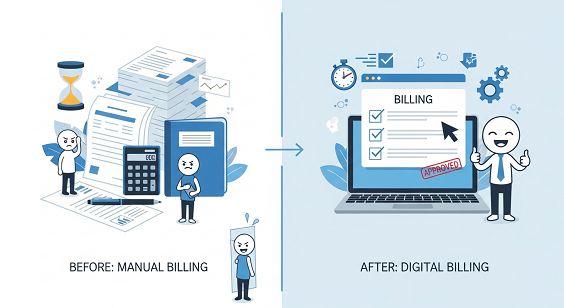
Paper-heavy billing consumes time that legal staff could spend on casework. Manually entering attendance notes, calculating graduated fees, and checking every field on a claim form introduces errors and slows submission. When a bill is rejected because of a missing date or wrong code, the correction cycle adds days or weeks to the payment timeline.
Digital billing systems reduce manual entry, apply formatting rules automatically, and flag incomplete fields before the claim leaves the office — saving time and protecting income.
How Faster Approvals and Payments Are Changing Habits
Cash flow is a real pressure for criminal defence firms operating on legal aid rates. Waiting weeks for a claim to be reviewed and paid is manageable for a single case — but across a full caseload, delays stack up into meaningful income gaps. Digital billing accelerates the review cycle by submitting claims in the correct format from the start, reducing the back-and-forth that slows manual claims.
Firms that have made the shift report fewer follow-up calls and faster payment — which in turn reinforces the habit of billing digitally.
Which 2026 Changes Are Making Digital Billing Harder to Ignore?
Several forces in 2026 are pushing digital Crown Court billing from a nice-to-have into an operational standard. Technology has become more accessible, client and regulator expectations have shifted, and the staffing pressures facing legal admin teams have made any process that saves time worth adopting. At the same time, record-keeping requirements have become more demanding, and the margin for billing errors has narrowed.
Firms that relied on one experienced billing manager to hold the process together are now recognising the risk of that model. If that person is absent, moves on, or is overwhelmed by volume, the entire billing pipeline slows. Digital systems distribute the knowledge and the process across the team — making billing consistent regardless of who is doing the work on any given day.
The combination of easier-to-use tools, remote working norms, and tighter oversight from the Legal Aid Agency is creating a tipping point. In 2026, digital Crown Court billing is no longer the approach of larger or more tech-forward firms — it is becoming the baseline expectation.
Automation Is Now Easier to Use and Easier to Trust
Earlier generations of billing software were complex, unreliable, and difficult to integrate with existing case management systems. That has changed. Modern tools are built with legal aid billing rules embedded, making it straightforward to select the correct fee category, input the right evidence counts, and check compliance before submission.
Automation now handles the repetitive tasks — formatting, calculation, duplicate checking — that previously required careful manual attention. Legal teams no longer need specialist technical knowledge to use these tools effectively.
Remote and Hybrid Legal Work Still Needs Digital Systems
The shift toward remote and hybrid working that accelerated in previous years has not reversed. Many legal teams now operate across multiple locations, with fee earners, billing staff, and supervisors working from different offices or from home on different days. Shared paper files and localised spreadsheets do not work in that environment.
Digital billing systems give everyone on the team access to the same up-to-date claim data, whether they are in the office, at court, or working remotely — without creating version control problems or gaps in the billing record.
What Benefits Are Making Firms Switch Sooner?
The practical benefits of digital Crown Court billing are specific, measurable, and directly relevant to the pressures legal teams face in 2026. Firms are not switching because digital billing sounds modern — they are switching because it solves real problems that cost time and money under the current system.
Fewer Errors Mean Fewer Delays and Corrections
Every error on a Crown Court claim creates a delay. A wrong offence code, a missing hearing date, or a disbursement without supporting evidence can trigger a reduction or a rejection — sending the claim back for correction and resubmission. Digital systems apply validation rules in real time, flagging problems before the form is submitted.
The result is a higher rate of clean, first-time claims that pass review without needing correction. For a firm submitting multiple Crown Court claims each month, the time and income saved from avoided corrections adds up quickly.
Better Tracking Helps Teams Stay Audit Ready
Digital billing systems maintain a complete record of every action taken on a claim — who entered which information, when documents were uploaded, when the form was submitted, and what response was received.
This audit trail is valuable in two situations: when an internal review is needed to understand why a claim was reduced, and when the Legal Aid Agency requests supporting documentation as part of a compliance check. Firms with clear digital records can respond to either situation quickly and confidently, without digging through physical files or reconstructing a timeline from memory.
Conclusion
Why digital Crown Court billing is growing in 2026 is no longer a complicated question. Legal teams want to work faster, make fewer mistakes, and get paid without unnecessary delays.
Digital systems deliver all three — while also supporting remote teams, reducing admin burden, and keeping firms audit-ready. The forces driving this shift are not temporary. Higher volumes, tighter rules, and changing work patterns are here to stay. Digital billing is rapidly becoming the standard for Crown Court defence work — and the firms that adopt it now will be better positioned as that standard becomes universal.